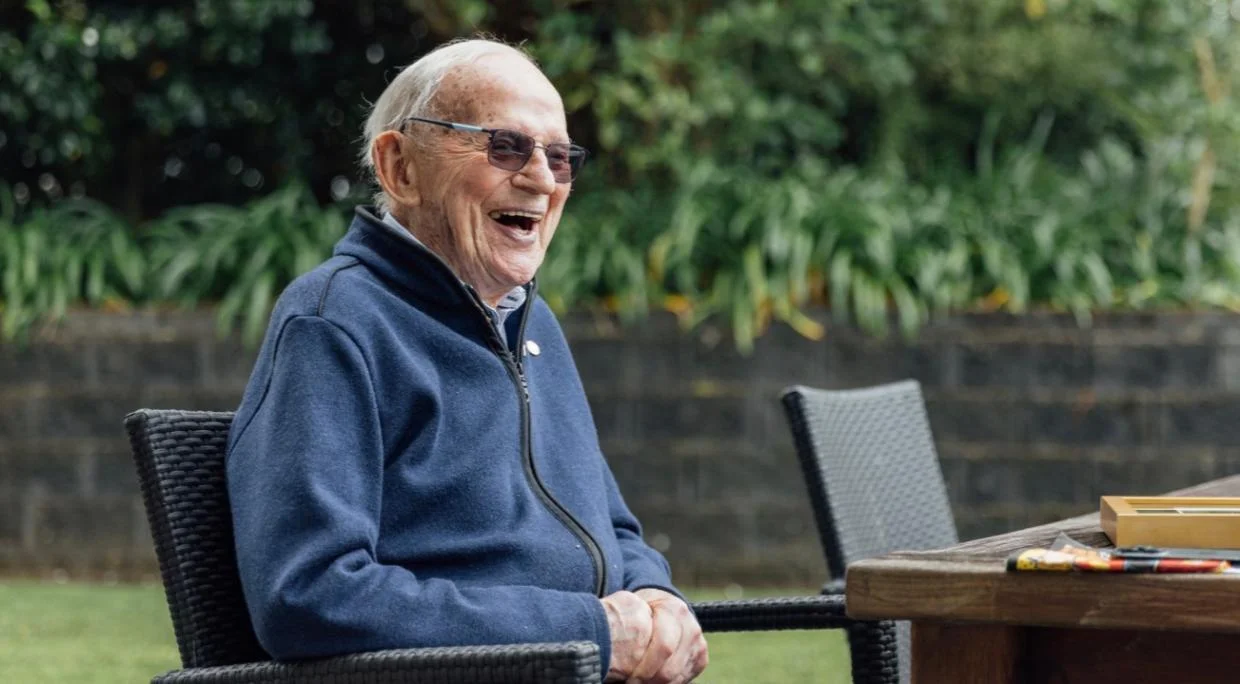
Albert Archibald Jelley, widely known as Arch Jelley, has died at the age of 104, bringing to an end a remarkable life devoted to education, athletics, and the development of talented runners in New Zealand. Athletics New Zealand announced that Jelley died on Saturday morning, remembering a coach whose influence extended across more than five decades.
His career included mentoring athletes who went on to achieve success on the international stage, as well as serving in several leadership roles within the country’s athletics community. Among his most celebrated coaching connections was Sir John Walker, who became an Olympic champion and one of the prominent middle-distance runners of his era.
Coaching John Walker to Historic Achievements
One of the defining moments associated with Jelley’s coaching career came in 1975, when Walker ran the mile in 3 minutes, 49.4 seconds in Gothenburg, Sweden. The performance made Walker the first man to break the 3:50 barrier in the mile.
The following year, Walker won the men’s 1500 metres at the Montreal Olympic Games, adding Olympic gold to an already significant athletic career.
Jelley’s contribution extended well beyond one athlete. Over the years, he worked with numerous runners who competed at major international events, helping shape New Zealand’s reputation in middle-distance athletics.
From Dunedin to a Lifetime in Education and Sport
Jelley was born in Dunedin on August 13, 1922. During the Second World War, he served in the navy before moving into education, where he built a long professional career. He spent more than two decades as principal of Sunnybrae Normal School in Auckland.
His coaching journey began in 1960 with Owairaka Harriers. Drawing on the methods associated with influential New Zealand coach Arthur Lydiard, Jelley helped athletes develop their endurance, discipline, and competitive ability.
His athletes included Ian Studd, who earned bronze in the mile at the 1966 Commonwealth Games, alongside Olympians Neville Scott, Chrissie Pfitzinger, and Robbie Johnston. Barbara Moore, another athlete he coached, won bronze in the 10,000 metres at the 1990 Commonwealth Games.
A Coach Who Continued Well Into His Later Years
Jelley’s dedication to athletics remained strong as he grew older. At 93, he helped coach Hamish Carson as Carson pursued qualification for the 2016 Rio Olympics, demonstrating a commitment to the sport that lasted well beyond the conventional years of a coaching career.
In 2024, Athletics New Zealand named Jelley a Life Member. Former athlete Ian Studd acknowledged the importance of Jelley’s mentorship, crediting his guidance with helping him reach the 1966 Commonwealth Games.
Jelley also served the sport at a national level. He coached New Zealand teams at the 1976 and 1984 Olympic Games, managed the country’s team at the inaugural World Athletics Championships in 1983, and spent 15 years as a national selector. He also served as president of Athletics New Zealand.
Honours and Lasting Influence
Jelley’s contributions were recognized through several honours. He received an OBE for services to sport and was inducted into the New Zealand Coaches Hall of Fame.
His influence was reflected not only in the medals and records achieved by athletes he coached, but also in the generations of runners he helped prepare for competition. His combined work in education, athlete development, and sports administration made him a significant figure in New Zealand athletics.
Obituary: Arch Jelley, born Albert Archibald Jelley on August 13, 1922, died aged 104. He is remembered for decades of coaching, his work with international athletes, and his leadership within New Zealand athletics.
Cause of Death: The announcement provided does not specify a cause of death.
Disclaimer: This article is based on the information supplied for this report. No specific medical cause of death has been provided, and none is inferred here.
Leave a Reply